01
Describe the application.
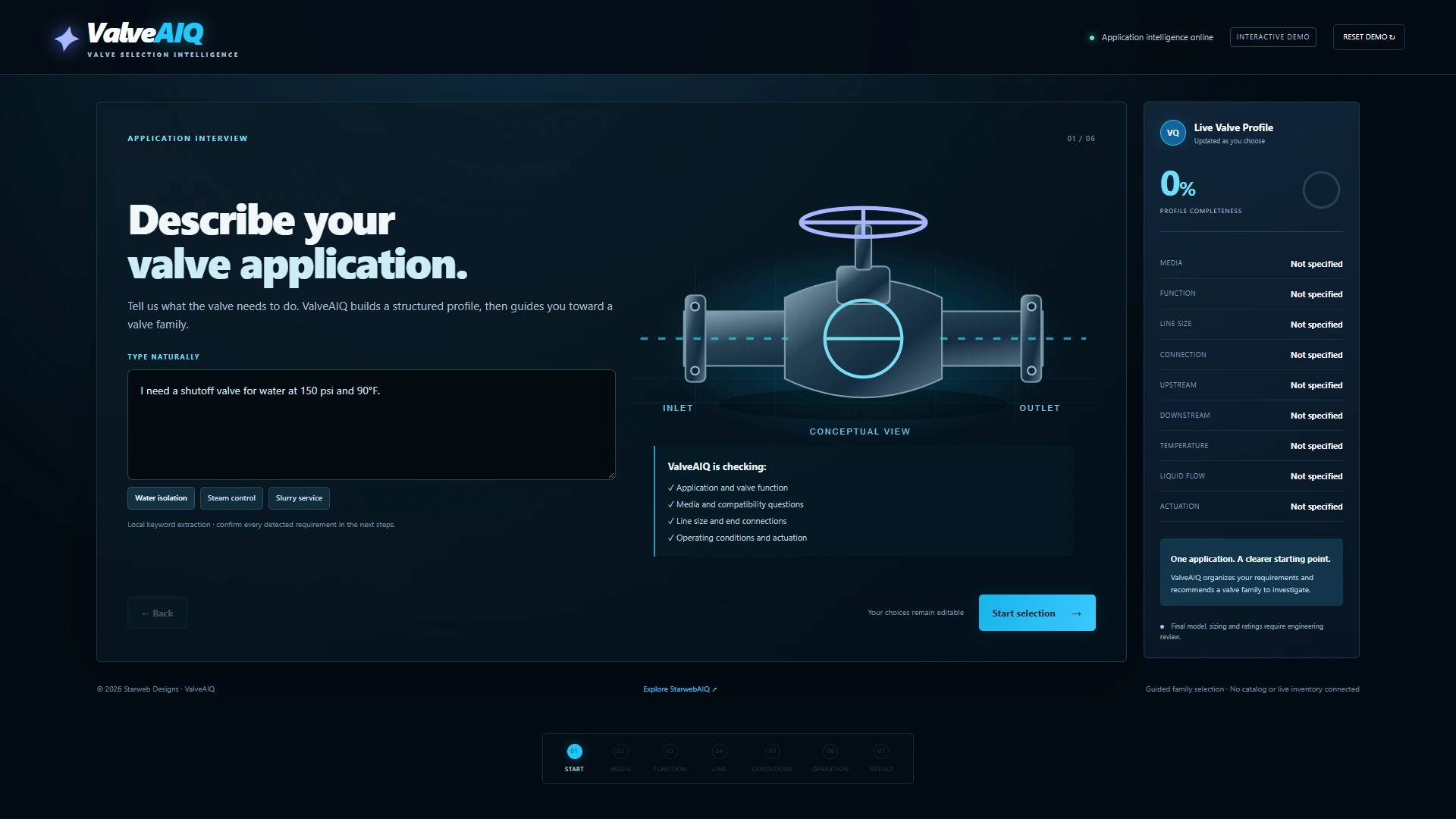
Start in plain language or try a sample application. The demo extracts a few local keywords, then asks you to confirm and complete the requirements in its guided interview.
Bring the medium, duty and operating requirements together—and give the valve conversation a clearer starting point.
Explore the actual interview: describe the application, confirm media and function, enter connection and operating details, then review a suggested valve family and enquiry summary.
Start in plain language or try a sample application. The demo extracts a few local keywords, then asks you to confirm and complete the requirements in its guided interview.
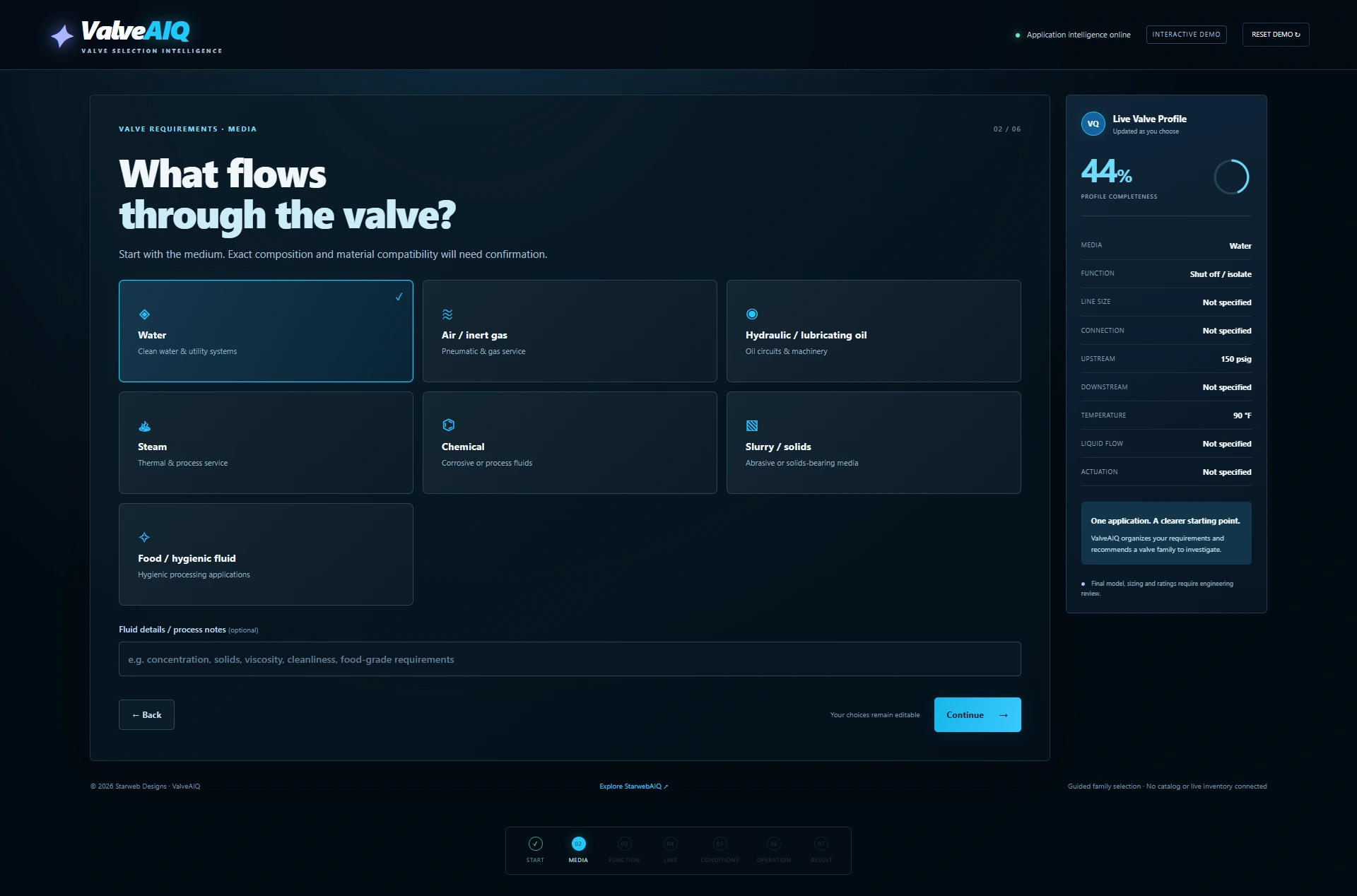
Choose what flows through the valve and add any fluid or process notes. The captured route uses water; the live profile keeps the selected requirements visible beside the interview.
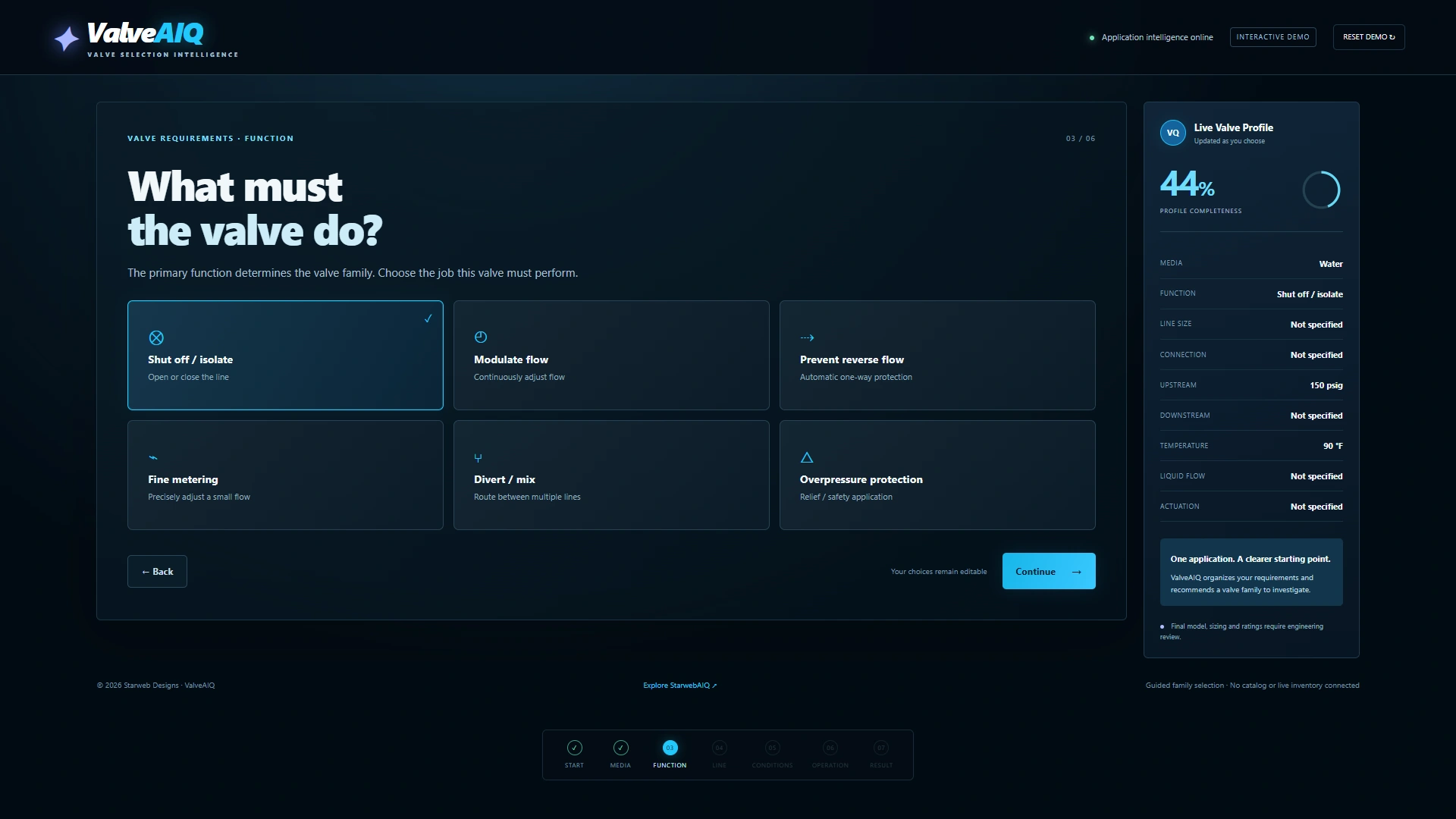
Choose the job: isolation, flow control, backflow prevention, metering, diverting or overpressure protection. This example follows the shutoff and isolation route.
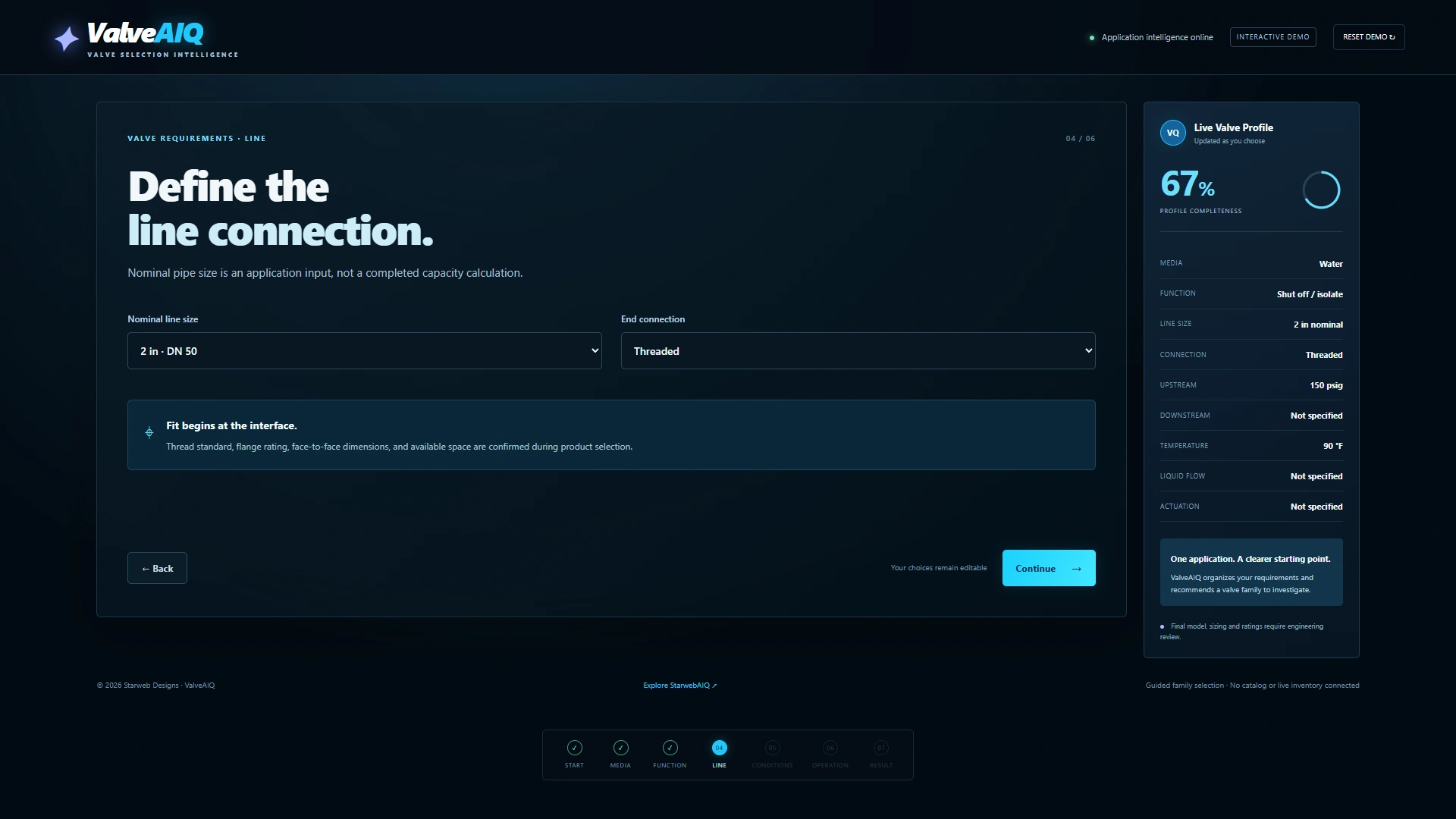
Enter a nominal line size and preferred connection. The sample uses a 2-inch threaded line; nominal pipe size is an input, not a completed valve-capacity calculation.
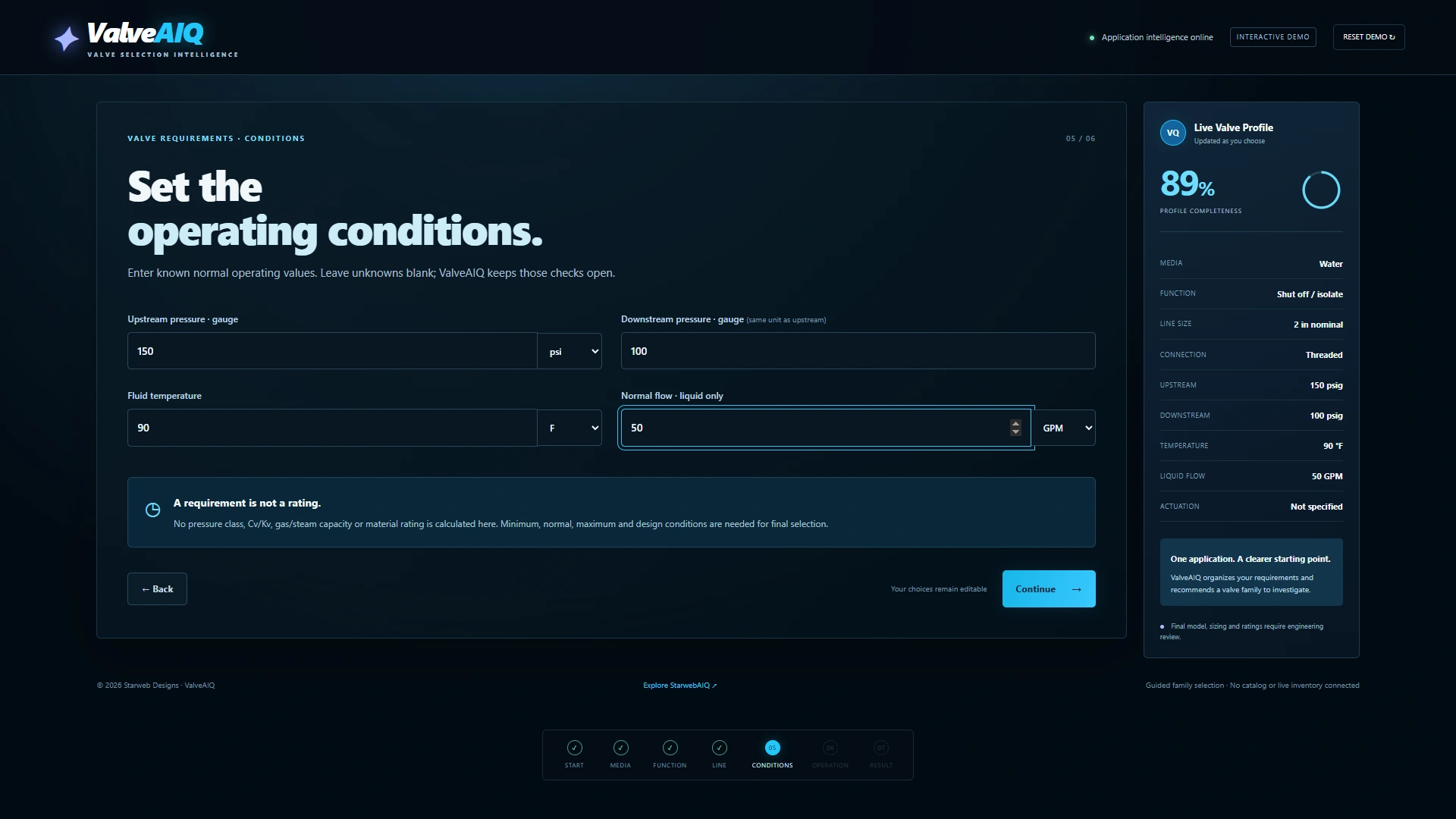
Enter known upstream and downstream pressures, temperature and liquid flow. Unknowns can stay open. This water example uses 150 and 100 psi gauge, 90 degrees Fahrenheit and 50 GPM as demonstration inputs.
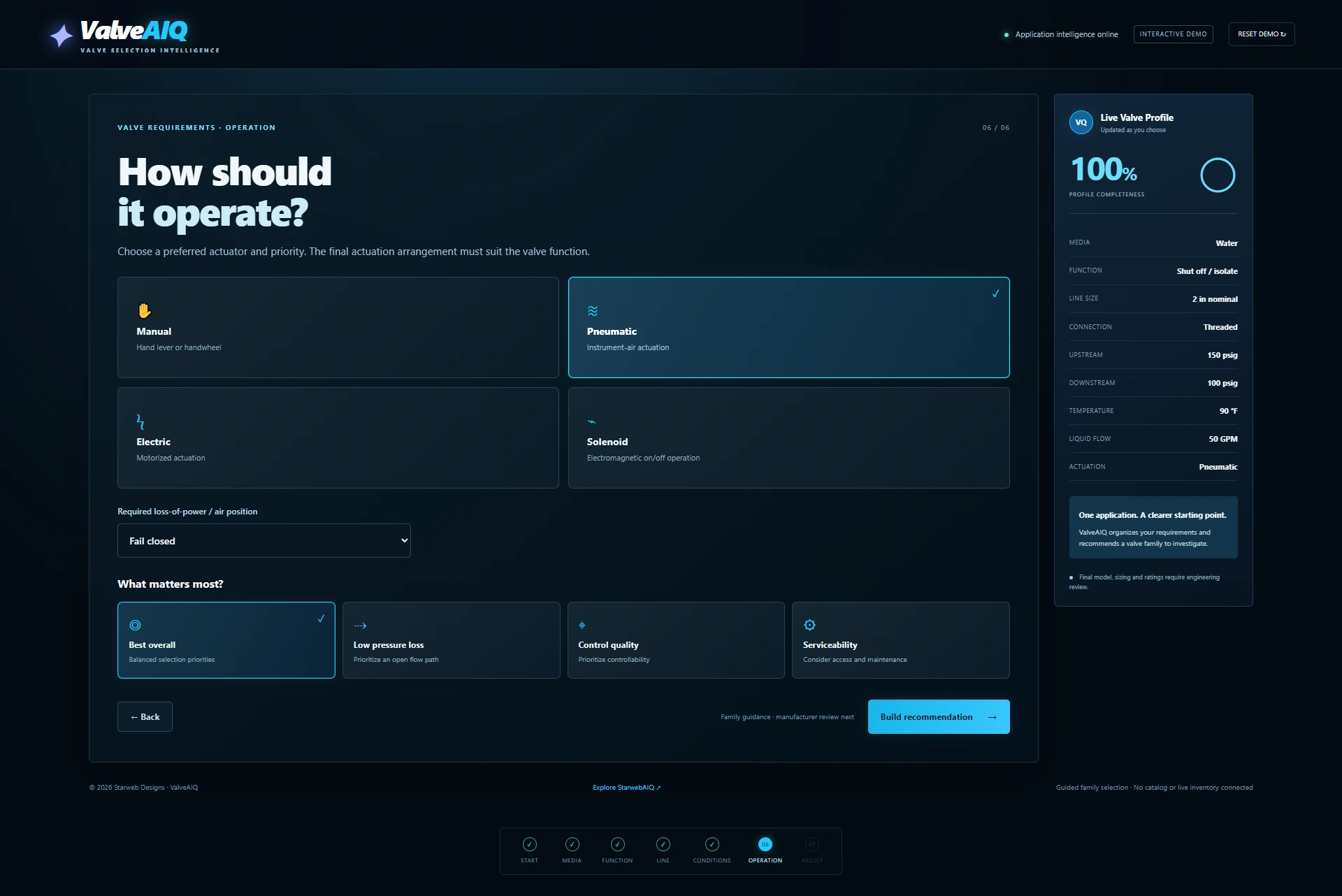
Select the preferred actuation, loss-of-power or air position, and selection priority. The sample uses pneumatic operation with fail closed requested; the final arrangement needs to suit the actual duty.
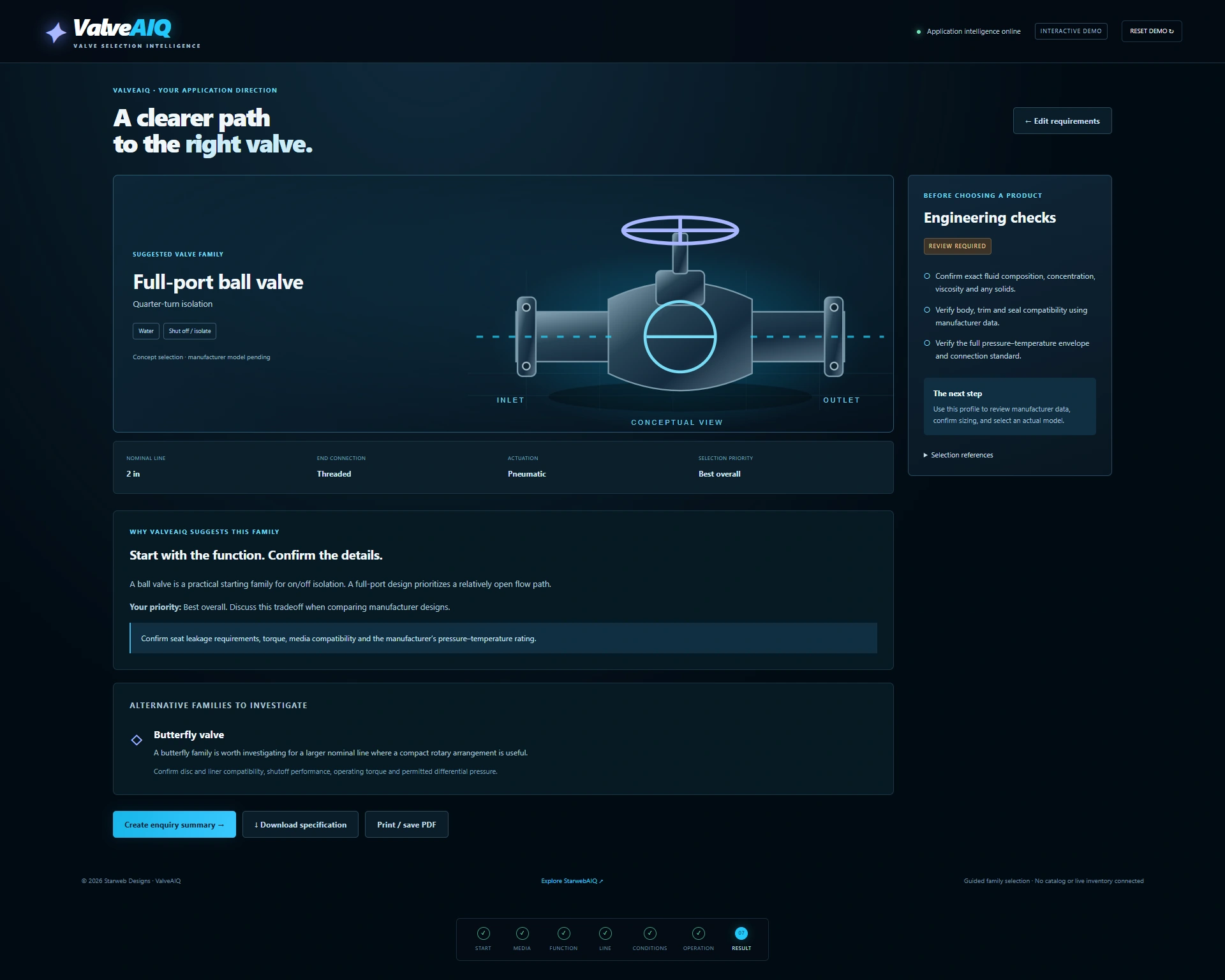
The demo suggests a full-port ball-valve family for this sample route, explains the starting point, offers an alternative family and lists open engineering checks. It does not select a verified manufacturer model or calculate final sizing and ratings.
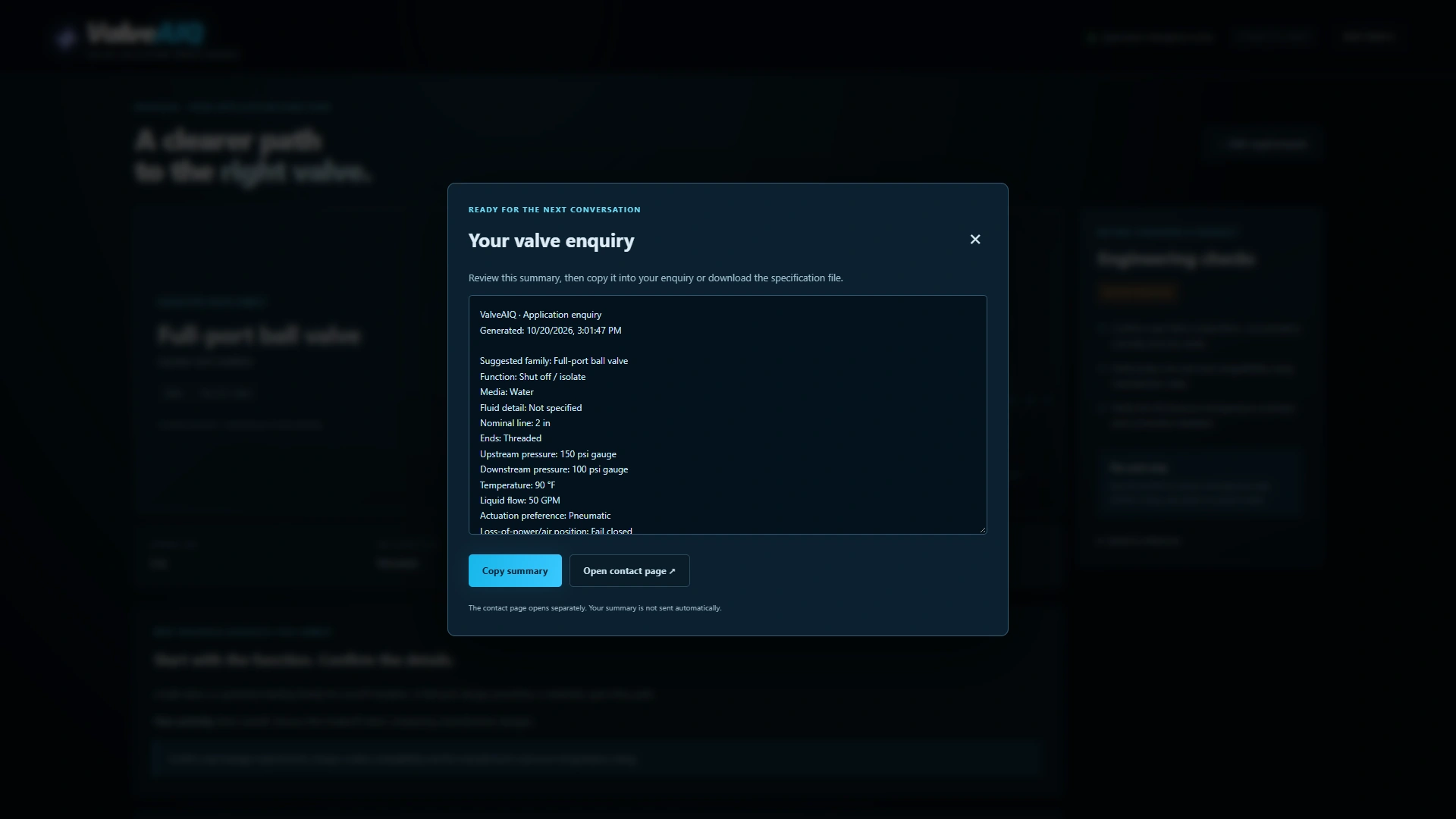
Open the enquiry summary to review the collected requirements, suggested family and remaining checks together. This preview does not send an enquiry automatically; the demo separately offers copying, specification download and a contact-page link.
Actual demonstration screens. Valve-family suggestions use preliminary demo rules; final model, sizing, materials, actuation and pressure-temperature ratings require manufacturer data and engineering review. No catalog, pricing or live inventory is connected. Production integration is scoped individually.
Try the interview, then review the suggested family and collected application requirements.
Customers may know the fluid, the line and what the valve needs to do before they know a product family. Give them a structured way to describe the application, keeping unknowns visible for the next technical conversation.
Try it for yourselfMedia, valve function, line size, connections, operating conditions and preferred actuation build one application profile through the interview.
The result explains the suggested family, presents an alternative to investigate and keeps the engineering checks alongside the recommendation.
The enquiry preview collects requirements, the suggested family and remaining checks. Use that profile to discuss manufacturer review and the data connections your production integration would need.
Give customers another way to explain their valve requirements. ValveAIQ demonstrates a guided starting point that can be planned around your product range, application knowledge and existing website.
Add a guided selection experience.
Keep your existing website.
The demo uses sample data. Your production scope is agreed individually.